

Wednesday, June 30, 2010

Monday, June 28, 2010

Sunday, June 27, 2010

Wednesday, June 23, 2010
Wednesday, June 16, 2010
A PREMATURE CELEBRATION

A Chamber of Commerce sponsored get-together to celebrate the completion of the new school and plans for a modern Union Depot was held on April 14 in the new school’s auditorium. A portion of the jubilation proved premature, however, for records show that throughout 1922 and much of 1923 litigation went on between the State Corporation Commission (representing Selma’s interests) and the Railroads who refused to build a new station. It was not until February of 1923 that Judge E. H. Crammer issued a writ requiring the Southern to proceed with cooperating with the ACL to build a Union Station; and in April of that year the Supreme Court upheld the decision.
Just a week after a fire damaged the old Ward Home on February 14, 1922, and George Brietz was injured while fighting the fire. a volunteer fire department was organized. Twenty-two men made up the company, equipment was purchased, and the town agreed to install an electric siren system.
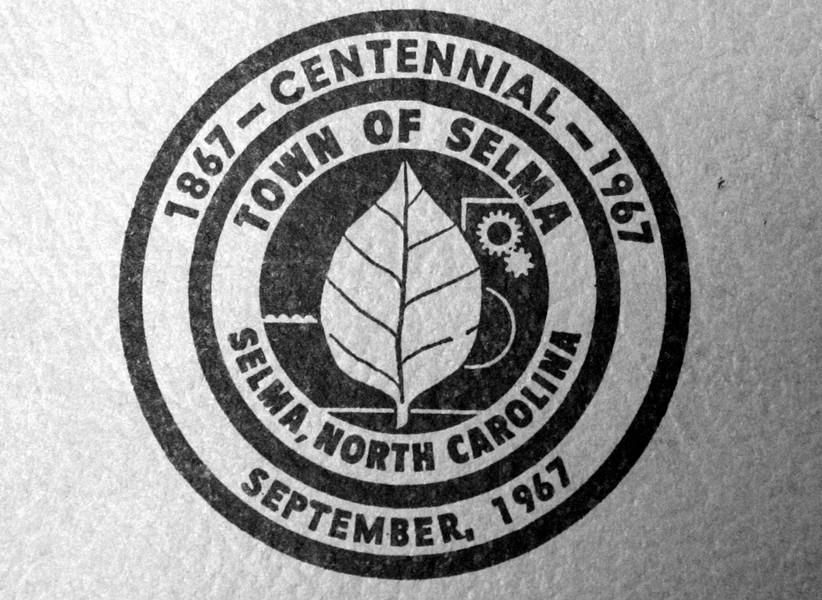
From the History of Selma - Centennial Program.
Monday, June 7, 2010
EARLY MAIL CARRIER

Bing Photo
Mr. B. B. Lee, who is the oldest contributor to this history, moved to Selma in 1915 as a mail carrier. For seven years he made his 24 mile round trip by horse and buggy. Later the route was expanded to 65 miles and Mr. Lee drove a Model T Ford. Because of the terrible condition of the roads, especially at one place, two boys, Carl Bagley and Arnold Pittman, met Mr. Lee each day with a team of mules and pulled his car from the mud hole. Although Mr. Lee retired on January 1, 1942, he still goes down town regularly and enjoys visiting friends in the stores.
In 1917 a new public school was built on Richardson Street. A year later another newspaper began publication here when Mr. N. E. Edgerton became publisher of the Johnstonian, and Dr. l W. Mayerburg was practicing Medicine here. In 1919 the Church of God of Prophecy was organized. With these events, Selma entered the Roaring Twenties. .
From the History of Selma - Centennial Program.
Saturday, May 22, 2010
THOSE “ROARING” TWENTIES

If Selma was concerned with bathtub gin, the Charleston, and the exploits of Charles Lindbergh, evidence in newspapers of the period does not show it. Instead, this period featured organization of clubs, churches and new manufacturing plants.
Early in 1920, Selma Cotton Mill was bought by a New York Corporation, Standard Coated Products Company, which spent some $500,000 in enlargement of the facility. They began the weaving of carded yarn used as backing for oilcloth.
In February, a report in the Smithfield Herald listed prospective or assumed enterprises and improvements for Selma during 1920: Cotton mill corporation, one million dollars; $100,000 brickyard; $40,000 bond issue for sewerage; $60,000 bond issue for streets and sidewalks; $50,000 hotel and new depot. “These are but a few of Selma’s new enterprises. With Selma’s unexcelled railroad facilities and financial advantages she is bound to grow,” the report concluded.
From the History of Selma - Centennial Program.
Subscribe to:
Posts (Atom)


